Embedded System
IoT
Hardware Security Module
Hardware Security Module
Apr 29, 2025
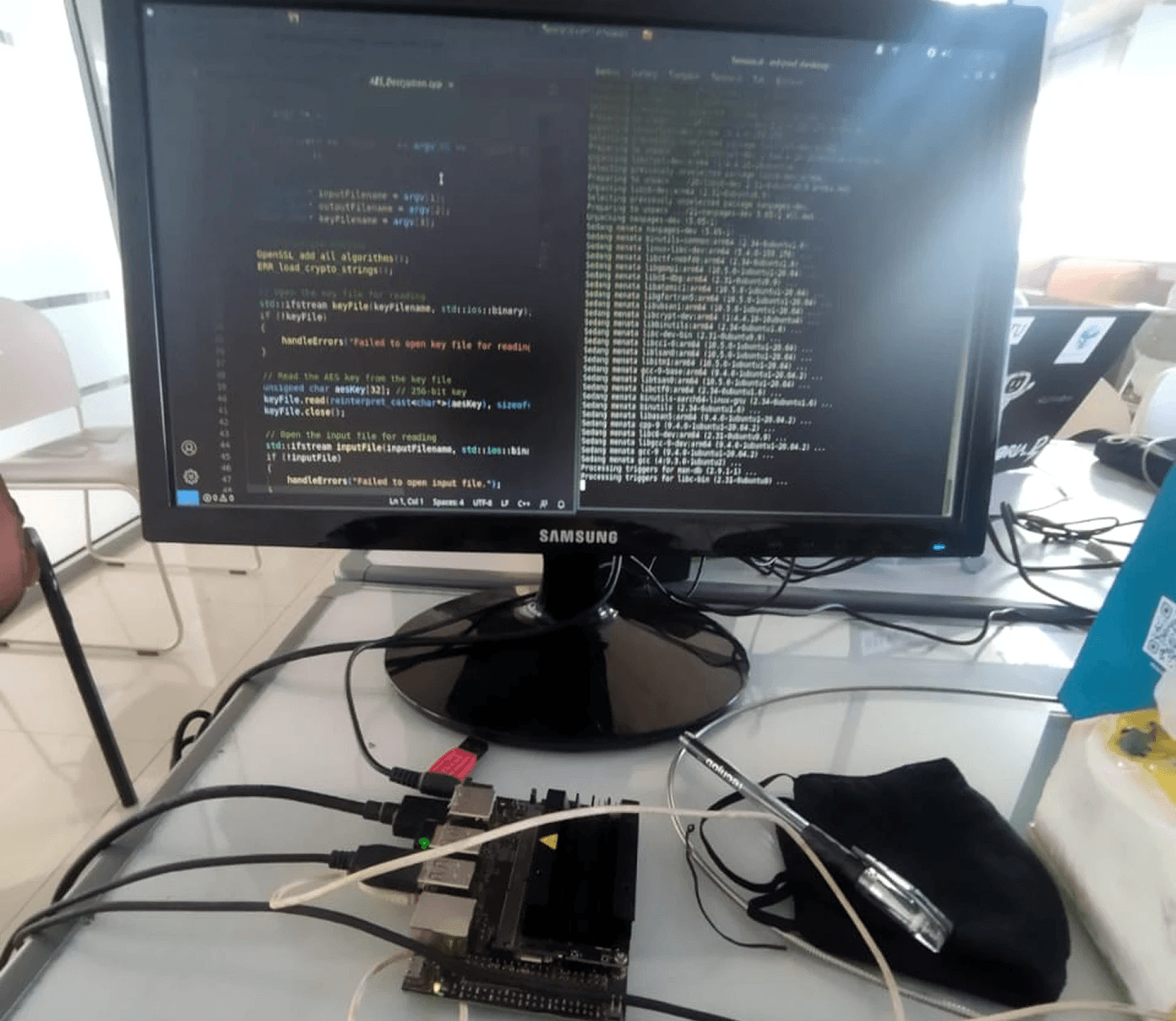
Overview
I led the development of a Hardware Security Module (HSM) prototype using a Xilinx Artix‑7 FPGA, tailored for integration into Venindo, PT. Stechoq Robotika’s medical ventilator. The goal was to embed hardware-level cryptographic protection and secure boot capabilities to ensure patient safety and device integrity. Key elements included:
Implementing a secure enclave using onboard logic to store cryptographic keys, execute AES/HMAC, and establish a root of trust within the ventilator’s FPGA platform.
Integrating boot-time authentication of the FPGA logic bitstream and on-chip partitioning to enforce isolation between trusted and non‑trusted modules.
Utilizing anti-tamper mechanisms, leveraging Xilinx’s fourth-generation secure IP cores (SECMON) common to the 7-series, to detect and prevent malicious alterations
Findings
Secure Boot and Root of Trust
Xilinx’s secure architecture ensures that the processor boots only after validating encrypted firmware/bitstream—an essential security layer for life-critical medical hardware .
Hardware Cryptography in Embedded Environments
The FPGA’s programmable logic enabled efficient offloading of encryption tasks (AES, HMAC) and secure key handling, corresponding with best practices in HSM design for embedded systems .Anti-Tamper & Device Reliability
Using Xilinx’s defense-grade features, we integrated anti-tamper detection and secure key zeroization—critical safeguards against malicious bitstream manipulation or runtime attacks.System Isolation & Partitioning
The Artix‑7’s security IP enabled clear separation between critical cryptographic modules and general FPGA logic, providing strong fault containment essential in medical devices.Prototype Validation
Through hardware testing, the module successfully secured Venindo’s boot process and protected medical integrity pathways, demonstrating feasibility and compatibility with medical-grade requirements.
Overview
I led the development of a Hardware Security Module (HSM) prototype using a Xilinx Artix‑7 FPGA, tailored for integration into Venindo, PT. Stechoq Robotika’s medical ventilator. The goal was to embed hardware-level cryptographic protection and secure boot capabilities to ensure patient safety and device integrity. Key elements included:
Implementing a secure enclave using onboard logic to store cryptographic keys, execute AES/HMAC, and establish a root of trust within the ventilator’s FPGA platform.
Integrating boot-time authentication of the FPGA logic bitstream and on-chip partitioning to enforce isolation between trusted and non‑trusted modules.
Utilizing anti-tamper mechanisms, leveraging Xilinx’s fourth-generation secure IP cores (SECMON) common to the 7-series, to detect and prevent malicious alterations
Findings
Secure Boot and Root of Trust
Xilinx’s secure architecture ensures that the processor boots only after validating encrypted firmware/bitstream—an essential security layer for life-critical medical hardware .
Hardware Cryptography in Embedded Environments
The FPGA’s programmable logic enabled efficient offloading of encryption tasks (AES, HMAC) and secure key handling, corresponding with best practices in HSM design for embedded systems .Anti-Tamper & Device Reliability
Using Xilinx’s defense-grade features, we integrated anti-tamper detection and secure key zeroization—critical safeguards against malicious bitstream manipulation or runtime attacks.System Isolation & Partitioning
The Artix‑7’s security IP enabled clear separation between critical cryptographic modules and general FPGA logic, providing strong fault containment essential in medical devices.Prototype Validation
Through hardware testing, the module successfully secured Venindo’s boot process and protected medical integrity pathways, demonstrating feasibility and compatibility with medical-grade requirements.