Artificial Intelligence
IoT
Leadership
FingerSense
FingerSense
Jun 21, 2023

Overview
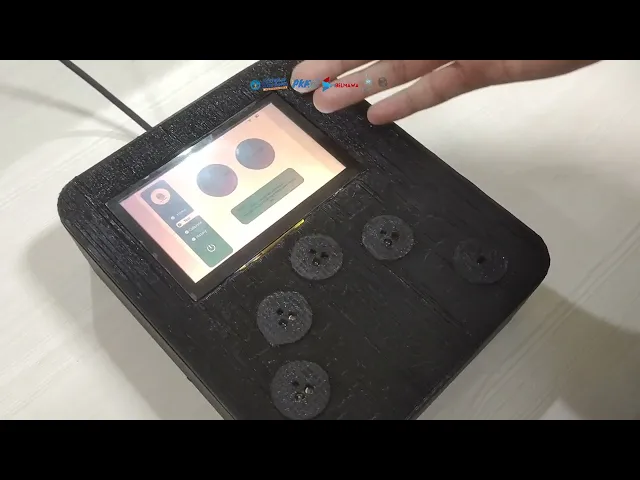
In early 2023, our team at Universitas Gadjah Mada (UGM) launched FingerSense, an innovative health-tech product aimed at detecting non-communicable diseases (such as diabetes and anemia) through a non-invasive blood measurement system. Using near-infrared (NIR) spectroscopy, we collect fingertip data via multi-wavelength NIR sensors. With ethical clearance from UGM’s Faculty of Medicine, we performed controlled data collection from volunteer subjects. The system then uses AI models trained on our dataset to predict biomarkers like glucose, cholesterol, hemoglobin, uric acid, and oxygen saturation, without the need for blood draws. This project combines electronics, medical protocols, and artificial intelligence into a single user-friendly diagnostic tool.
Findings
Feasibility of Non-Invasive Monitoring
Recent literature confirms that NIR-based spectroscopy can accurately estimate blood glucose and cholesterol through non-invasive methods . FingerSense applies these principles using custom-built NIR sensors and signal processing for health diagnostics.
AI Model Performance & Data Integrity
We trained AI models, such as Random Forest and Neural Networks, on ethically collected data, achieving promising prediction accuracy comparable to existing research (e.g., random forest and ANN have shown high performance in NIBG monitoring).End-to-End System Implementation
Beyond algorithm development, our project includes full-stack electronics design, data acquisition hardware, signal processing, and a basic user interface, demonstrating practical deployment of AI-driven medical devices.Ethical & Regulatory Compliance
Guided by UGM’s ethical clearance, our project adhered to medical device protocols, ensuring participant protection during data collection, echoing national best-practices frameworks .Potential for Real-World Impact
By reducing dependency on invasive tests, FingerSense offers user comfort, cost savings, and frequent monitoring, aligning with global trends toward wearable, AI-powered health tools.
Overview
In early 2023, our team at Universitas Gadjah Mada (UGM) launched FingerSense, an innovative health-tech product aimed at detecting non-communicable diseases (such as diabetes and anemia) through a non-invasive blood measurement system. Using near-infrared (NIR) spectroscopy, we collect fingertip data via multi-wavelength NIR sensors. With ethical clearance from UGM’s Faculty of Medicine, we performed controlled data collection from volunteer subjects. The system then uses AI models trained on our dataset to predict biomarkers like glucose, cholesterol, hemoglobin, uric acid, and oxygen saturation, without the need for blood draws. This project combines electronics, medical protocols, and artificial intelligence into a single user-friendly diagnostic tool.
Findings
Feasibility of Non-Invasive Monitoring
Recent literature confirms that NIR-based spectroscopy can accurately estimate blood glucose and cholesterol through non-invasive methods . FingerSense applies these principles using custom-built NIR sensors and signal processing for health diagnostics.
AI Model Performance & Data Integrity
We trained AI models, such as Random Forest and Neural Networks, on ethically collected data, achieving promising prediction accuracy comparable to existing research (e.g., random forest and ANN have shown high performance in NIBG monitoring).End-to-End System Implementation
Beyond algorithm development, our project includes full-stack electronics design, data acquisition hardware, signal processing, and a basic user interface, demonstrating practical deployment of AI-driven medical devices.Ethical & Regulatory Compliance
Guided by UGM’s ethical clearance, our project adhered to medical device protocols, ensuring participant protection during data collection, echoing national best-practices frameworks .Potential for Real-World Impact
By reducing dependency on invasive tests, FingerSense offers user comfort, cost savings, and frequent monitoring, aligning with global trends toward wearable, AI-powered health tools.